SVOM, les chercheurs provençaux en première ligne pour étudier les cataclysmes de l’Univers
Après plus de dix ans de développement, SVOM, la mission franco-chinoise va être lancée le 22 juin depuis la base de lancement de Xichang en Chine. Cette étape ouvrira une nouvelle page sur l’étude des phénomènes cataclysmiques de l’Univers.
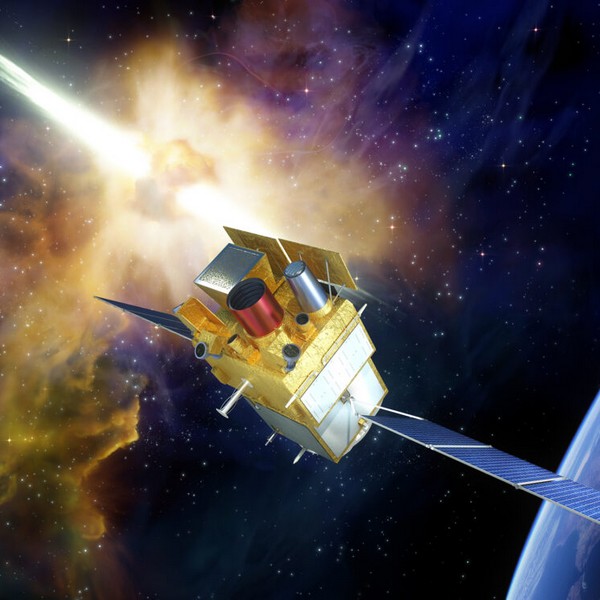
La mission SVOM - Space-based multi-band astronomical Variable Objects Monitor - est une mission franco-chinoise consacrée à l’étude des plus lointaines explosions d’étoiles, les sursauts gamma. « Ces sources sont des bouffées de rayonnement gamma très brèves et intenses produites par des phénomènes parmi les plus extrêmes de l’Univers. Elles sont associées à la mort des étoiles les plus massives ou à la fusion d'objets stellaires compacts (étoile à neutrons ou trou noir). L'énergie rayonnée en quelques secondes par un sursaut gamma est équivalent à l’énergie produite par le Soleil durant sa durée de vie » explique Damien Dornic, chercheur au Centre de Physique des Particules de Marseille , sur les projets SVOM et COLIBRI. En raison de ces luminosités extrêmes, les sursauts gamma peuvent être utilisés pour sonder les régions de l'Univers les plus hostiles et les plus éloignées du point de vue de l'observation.
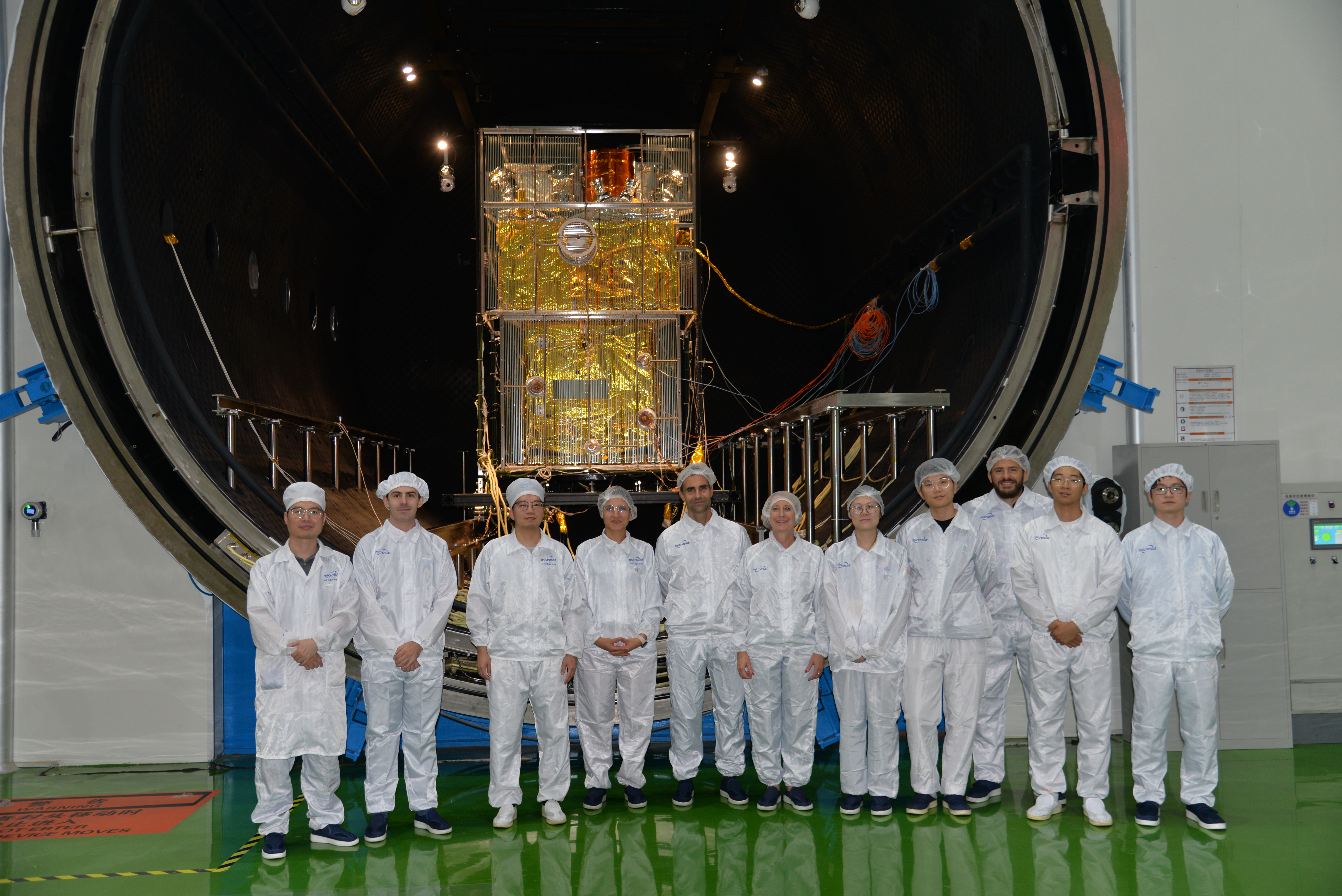
Après plus de dix ans d’intense développement, la mission doit être lancée le 22 juin 2024 par la fusée chinoise Longue Marche 2C depuis la base de lancement de Xichang en Chine. SVOM comprend un satellite en orbite basse, placé à une altitude de 650 km. A cette altitude, le satellite effectue le tour de la Terre en un peu plus de 95 minutes, soit 15 révolutions par jour. Des membres de la collaboration se déplaceront en Chine pour suivre le lancement et préparer la phase de commissioning de 3 mois et les premières opérations.
Cette mission est le fruit d’une collaboration fructueuse des deux agences spatiales, chinoise (CNSA ) et française (CNES ) avec des contributions d’une dizaine de laboratoires en France, dont le Laboratoire d’Astrophysique de Marseille , l’Observatoire de Haute Provence et le CPPM1. Cette mission comporte un ensemble d’instruments au sol et dans l’espace qui observent en synergie pour détecter, localiser et caractériser dans de multiples longueurs d’ondes, du gamma jusqu’au visible, en passant par les rayons X, ces explosions cosmiques.
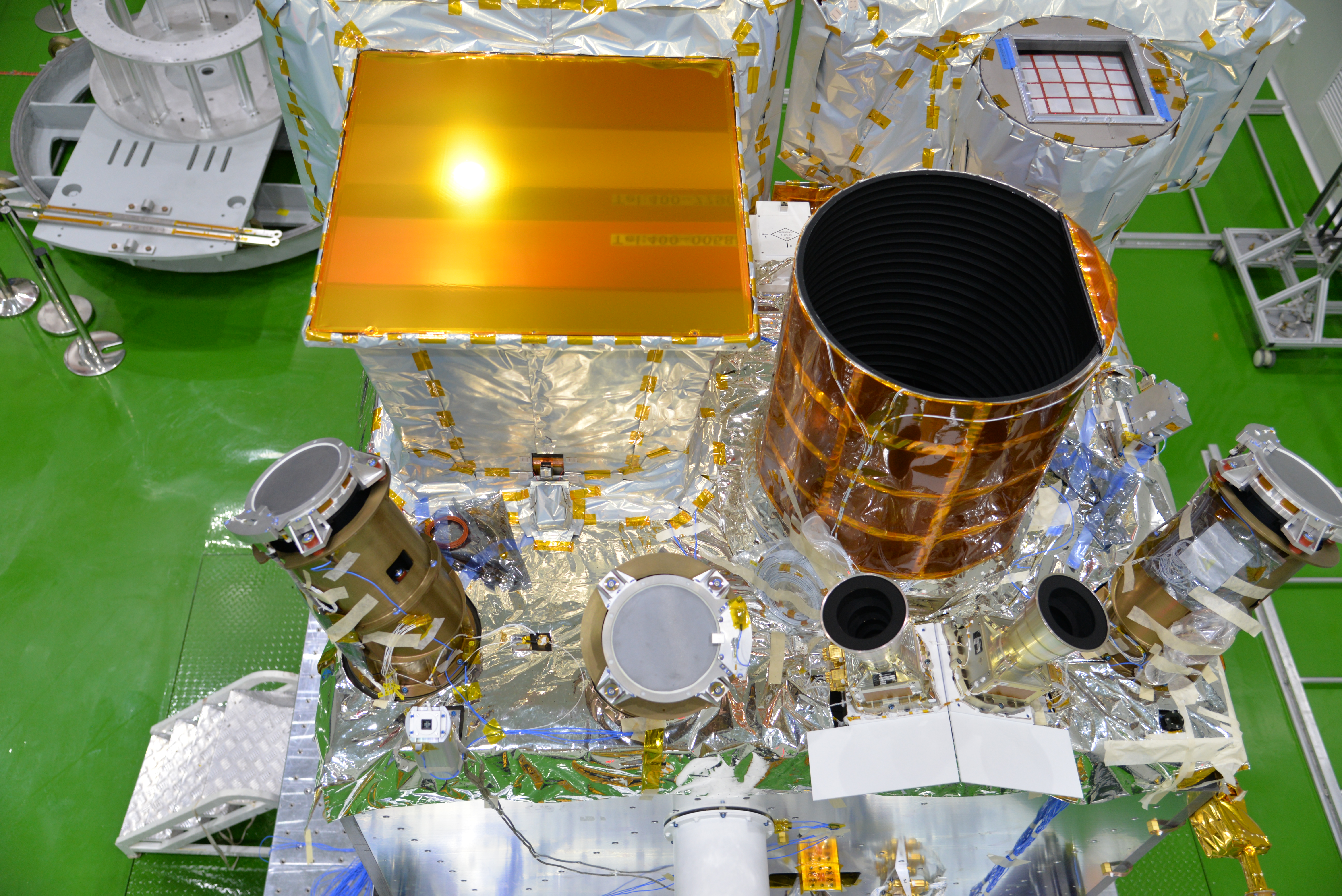
L’instrument ECLAIRs permet de détecter et localiser les sursauts gamma dans le ciel, les GRM , complétant la mesure de la réponse spectrale à haute énergie. Une fois un sursaut détecté, le satellite va aligner, en direction de ce sursaut, les deux instruments à petit champ de vue, MXT et VT , dans la gamme des rayons X et en visible, ayant une meilleure sensibilité. En parallèle, les observations depuis l’espace seront complétées par celles de plusieurs télescopes robotiques au sol : GWAC et C-GFT en Chine, et COLIBRI au Mexique.
Le LAM, l’OHP et le CPPM sont fortement impliqués dans le développement du segment sol de la mission (base de données de la mission, outils de shift, lien avec les télescopes au sol…). Ces laboratoires jouent aussi un rôle clef dans la construction de l’observatoire astronomique COLIBRI, en collaboration avec des scientifiques de l’Université Nationale Autonome du Mexique (UNAM).
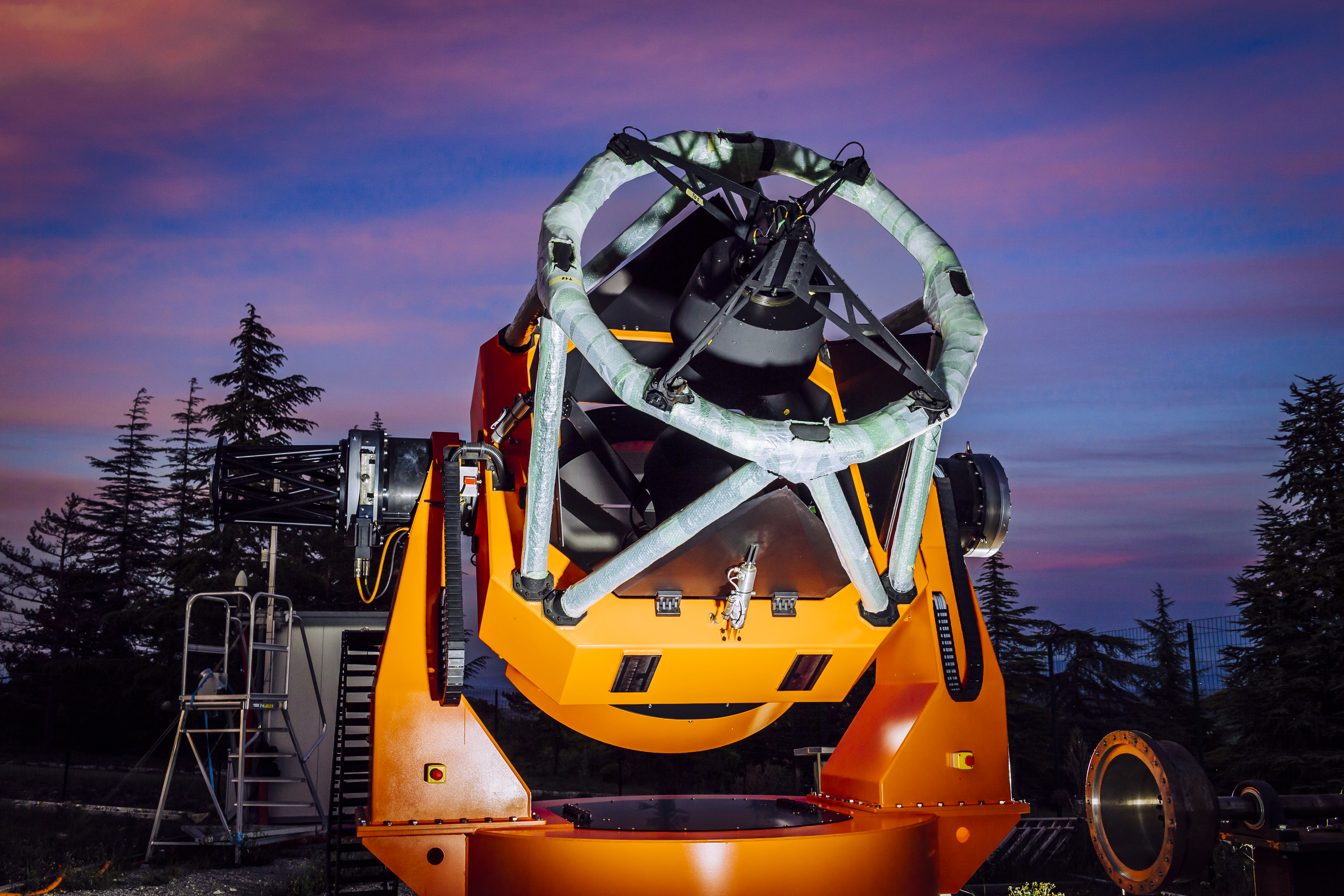
COLIBRI accueille un télescope robotique d’une grande rapidité. « Il est capable de pointer vers n’importe quelle direction dans le ciel en une vingtaine de secondes, trouver rapidement la contrepartie des sursauts gamma détectés par ECLAIRs et de la caractériser (courbe de lumière et estimation de la distance). Cette rapidité d’exécution et d’analyse est fondamentale pour le succès de la mission et fait de COLIBRI un télescope aux capacités absolument uniques au sein de l’astronomie mondiale » explique Stéphane Basa, co-responsable scientifique de la mission SVOM et responsable scientifique du projet COLIBRI. Le télescope est en cours d’installation à l’Observatoire National du Mexique à San Pedro Martyr et sera inauguré cet été. Il est équipé de deux instruments : DDRAGO (deux voies simultanées en visible) et CAGIRE (une voie en proche infra-rouge).
Ce projet a été fortement financé et soutenu par la fondation A*Midex d’Aix-Marseille Université à travers le Labex OCEVU puis l’Institut de Physique de l’Univers. Pour assurer une exploitation scientifique partagé et collaborative de COLIBRI, le projet a également mis en place le Laboratoire International Associé (LIA) ERIDANUS soutenu par le CNRS, le CONAHCyT et l’UNAM (démarré en 2019), programme qui a été ensuite renouvelé en 2022 par le CNRS et l’UNAM sous la forme d’un International Research Project (IRP). Depuis 2019, les équipes se réunissent de façon alternée entre la France et le Mexique, ceci afin de renforcer les liens humains, tout en préparant l’exploitation scientifique de COLIBRI.
SVOM et COLIBRI permettront ainsi d’écrire une nouvelle page dans la compréhension du phénomène des sursauts gamma, tout en permettant leur utilisation pour comprendre « l'enfance » de l'Univers. Ils prendront également une place importante dans l’astronomie multi-messager, en complétant parfaitement le télescope à neutrinos KM3NeT ainsi que les détecteurs d’ondes gravitationnelles.
Plus d’informations :
-
SVOM : https://www.svom.eu/
-
COLIBRI : https://www.colibri-obs.org/
-
KM3NeT : https://www.km3net.org
Contacts :
-
Stéphane Basa, directeur de recherche CNRS au Laboratoire d’Astrophysique de Marseille et à l’Observatoire de Haute Provence (OSU Pythéas / Aix-Marseille Université – CNES – CNRS)
-
Damien Dornic, chargé de recherche CNRS au Centre de Physique des Particules de Marseille (Aix-Marseille Université – CNRS)
La mission Euclid livre de nouvelles images pour accompagner ses premiers résultats scientifiques
Actualité scientifique CNRS – 23 mai 2024
Euclid est une mission européenne, construite et opérée par l'ESA, avec des contributions de la NASA. La production et l'exploitation des résultats produits par le télescope sont pilotées par un consortium international, incluant des scientifiques du CNRS Terre & Univers et CNRS Nucléaire & Particules. Cette collaboration réunit plus de 2000 scientifiques, répartis dans 300 laboratoires et instituts et 18 pays différents. L'Institut d'Astrophysique de Paris (IAP), comptant parmi les Observatoires des Sciences de l'Univers (OSU) de l'INSU, assume le rôle de responsable scientifique de la mission ainsi que la gestion du Consortium Euclid. Moins d'un an après son lancement, le télescope spatial livre aujourd'hui cinq nouvelles images qui accompagnent les premiers articles scientifiques à paraître exploitant cette première série de données.
Lire l’intégralité du résultat scientifique
Contact CPPM : William Gillard, responsable de l’équipe Cosmologie
Stéphanie Escoffier, responsable scientifique Euclid-France
Plus d’informations sur les activités de l’équipe Cosmologie au CPPM : https://www.cppm.in2p3.fr/web/fr/recherche/cosmologie/
Dernière modification: 30 sept. 2024 à 11:25:30Campagne de tests de prototypes de l’expérience MADMAX auprès d’un aimant au CERN
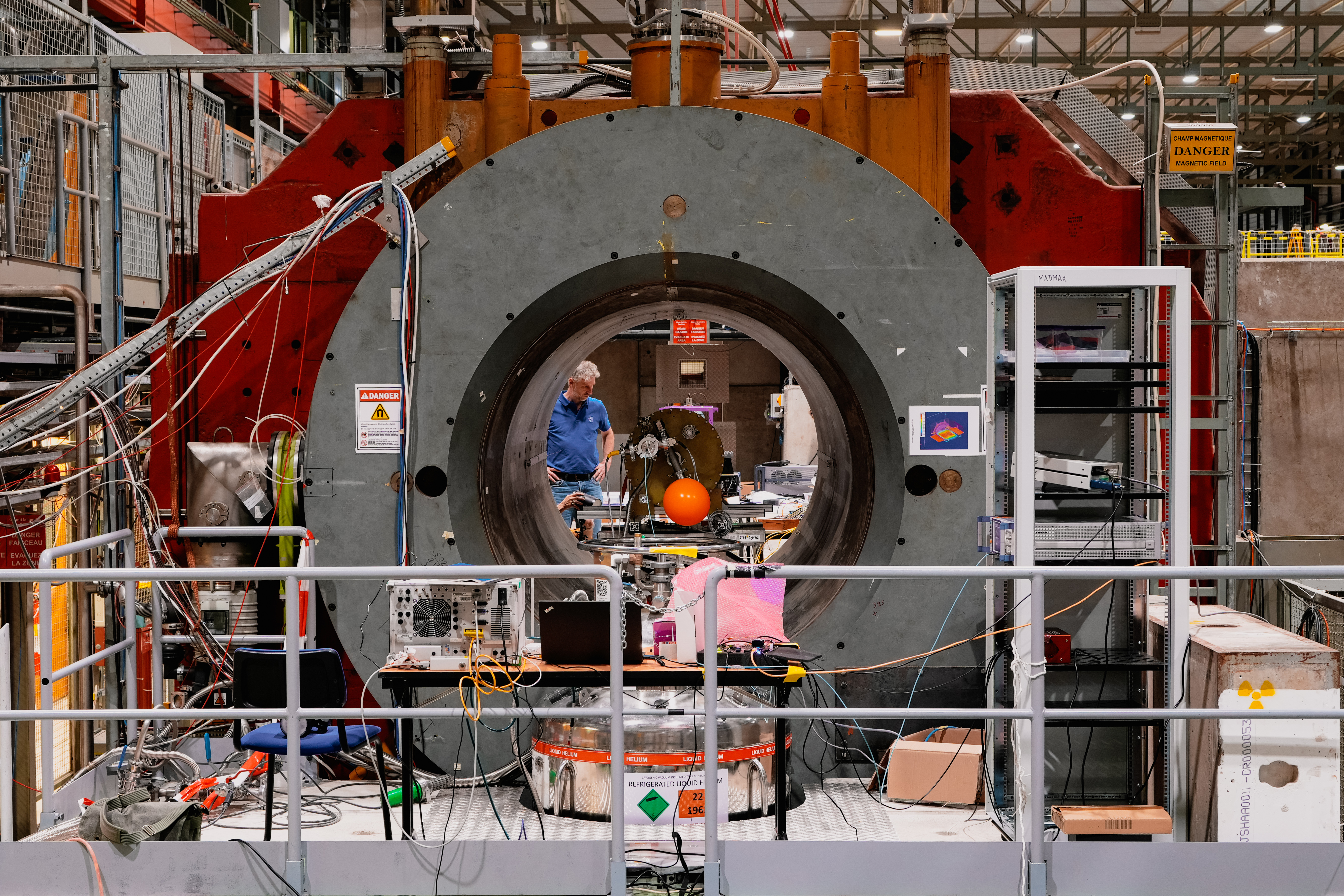
Une campagne de cinq semaines de tests a été effectuée sur deux prototypes de l’expérience MADMAX en février et mars 2024 dans l’aimant Morpurgo du CERN. Ces prototypes sont constitués de 3 disques fixes de saphir de 10 ou 20 cm de diamètre. Les données ont été prises à la température ambiante pour le premier, avec plusieurs configurations des disques, et à la température de l’hélium liquide pour le second, permettant d’améliorer grandement le rapport signal sur bruit. La photo (© 2024 CERN) montre le cryostat (au centre de l’aimant), qui contient un prototype de MADMAX et permet de faire des mesures à la température de l’hélium liquide grâce à la connexion avec la cuve placée devant l’aimant.
L'équipe Matière Noire du CPPM (avec Pascal Pralavorio en coordinateur local) est responsable de ces tests pour la collaboration MADMAX, qui s’est réunie au CERN entre le 13 et le 15 mars 2024 pour discuter des premiers résultats. Le succès de cette campagne de tests marque un jalon fondateur pour l’expérience. Les données accumulées permettront d’explorer pour la première fois trois domaines en masse autour de 80 micro-eV pour des candidats à la matière noire appelés « Axion-like particles », ce qui devrait donner lieu à plusieurs publications dans le courant de l’année 2024. La prochaine étape, pour laquelle le CPPM joue un rôle de premier plan, consiste à construire et tester un prototype avec des disques pouvant être déplacés avec une précision au micron.
Publication dans le bulletin du CERN "MADMAX aux avant-postes pour la recherche d'axions" : https://home.cern/fr/news/news/experiments/madmax-forefront-search-axions
Photos prises lors de la campagne de tests : https://cds.cern.ch/record/2892693
Contact : Fabrice Hubaut, responsable de l'équipe Matière Noire au CPPM
La plus grande caméra astronomique du monde bientôt prête à scruter le ciel
Communiqué de presse, 03 avril 2024 Tout juste assemblée, la caméra LSST est désormais prête à être acheminée depuis le SLAC National Accelerator Laboratory aux États-Unis vers l’Observatoire Vera C. Rubin au Chili où elle sera installée en mai 2024. Dotée de 3,2 milliards de pixels, c’est la plus grande caméra astronomique jamais construite. Sa conception aura nécessité près de deux décennies et mobilisé plusieurs centaines de scientifiques du monde entier, dont plusieurs équipes du CNRS. Pendant les dix prochaines années, la caméra observera le ciel austral quotidiennement, à raison de 800 clichés par nuit, couvrant chacun une surface équivalente à 40 fois celle de la Lune. Ses deux objectifs : étudier et cartographier en 3D l’Univers observable dit « statique », mais aussi surveiller les phénomènes célestes dits « transitoires ».
Lire l’intégralité du communiqué https://www.cnrs.fr/fr/presse/la-plus-grande-camera-astronomique-du-monde-bientot-prete-scruter-le-ciel
Contact CPPM : Dominique Fouchez, directeur de recherche CNRS, responsable de l’équipe Cosmologie
Dernière modification: 17 mai 2024 à 15:10:30Reprise des données pour Belle II
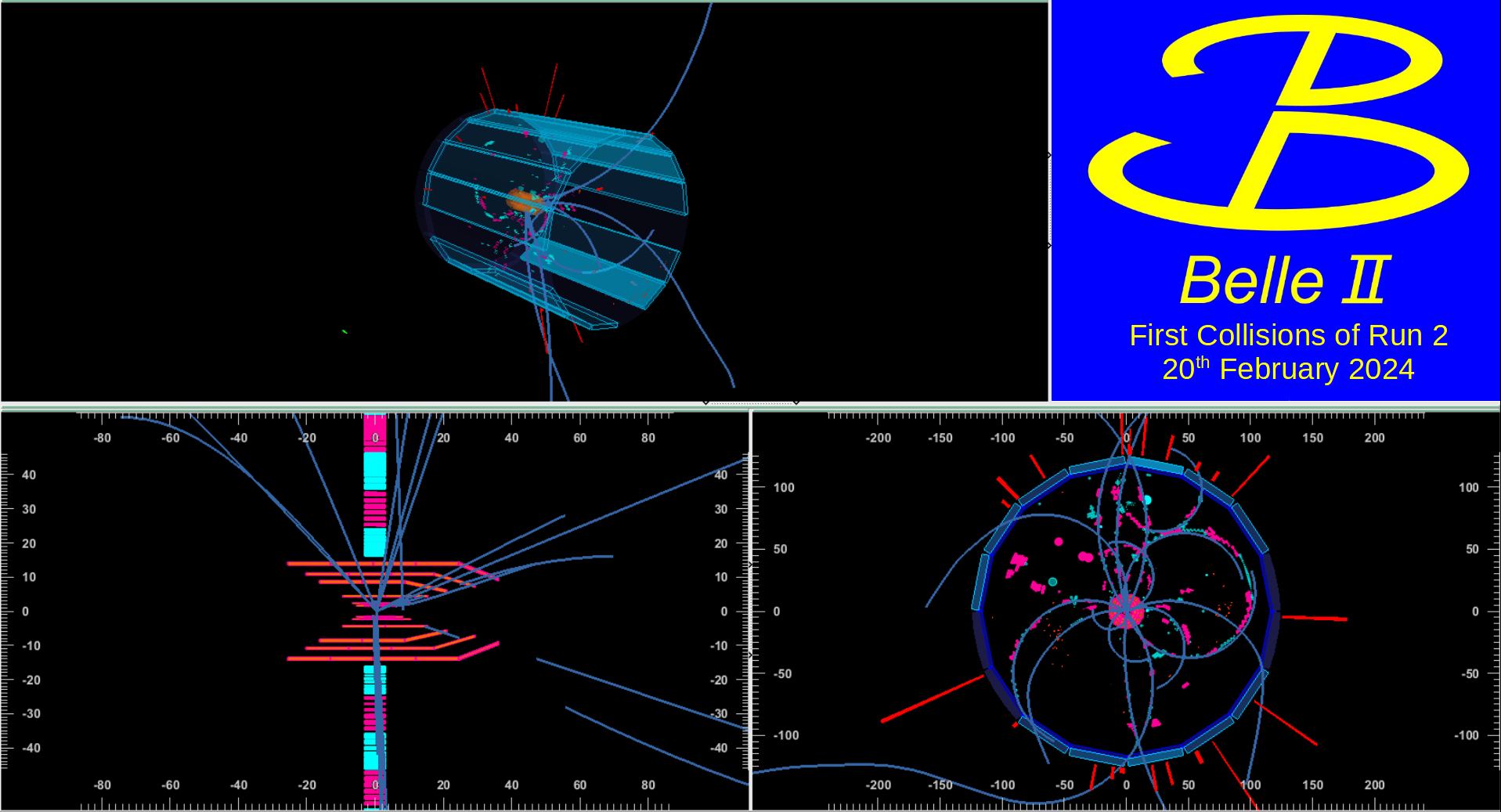
Après une interruption technique d'un an et demi, la prise de données reprend pour Belle II ! Ce premier "long shutdown" a permis d'apporter des améliorations à l'accélerateur SuperKEKB, dans le but d'améliorer l'injection et de réduire le bruit de fond venant des faisceaux, ainsi qu'à l'expérience Belle II qui a maintenant un détecteur de vertex complet. Les premières collisions du Run 2 ont eu lieu le 20 février 2024, les paramètres de la machine vont être ajustés petit à petit dans le but d'améliorer le précédent record de luminosité instantanée et d'excéder 10^35/cm2/s.
Plus d’informations :
- Activités Belle II au CPPM : https://www.cppm.in2p3.fr/web/fr/recherche/physique_particules/#Belle%20II
- Présentation du projet Belle II à l’IN2P3 : https://atrium.in2p3.fr/nuxeo/nxfile/default/42481620-aa3c-4ce5-bb87-67cc4d5d143b/blobholder:0/belle-II.pdf
Contact : Justine Serrano, directrice de recherche CNRS, responsable de l’équipe Belle II